CEE VC Survey / 2026
The first study of how venture capitalists make decisions focused on CEE specifically

How do venture capitalists make decisions?

The Central, Eastern & South-Eastern Europe edition

In a landmark 2020 study, researchers at Stanford, Harvard, Chicago Booth and UBC asked 885 U.S. investors exactly how they find, judge, and back their deals. This survey brings those questions to Central, Eastern and South-Eastern Europe, the first study focusing on this region specifically.

About 15-20 minutes  /  Participants get the report first  /  Individual answers stay strictly confidential
10 short sections
From the author of the original study

“If you could increase the representativeness of your region, that would be a substantial improvement. I will be happy to review the outcome of the study.”

Prof. Ilya A. Strebulaev
The David S. Lobel Professor of Private Equity & Finance
Founder & Director, Venture Capital Initiative, Stanford Graduate School of Business
{{ socialProofText }}
Supported by
Association logo
Association logo
Association logo
1
The question

A landmark study showed how venture capital really works. It stopped at the West.

In How Do Venture Capitalists Make Decisions?, a 2020 study, Paul Gompers, Will Gornall, Steven Kaplan and Ilya Strebulaev, of Harvard, UBC, Chicago Booth and Stanford, surveyed 885 U.S. investors on how they source, pick, and support companies. Their answers reshaped how the industry understands itself.

Almost all of that evidence comes from the United States and Western Europe. This survey asks the same questions in CEE alone. It also helps a young student finish his Master's thesis at Charles University in Prague, Czech Republic.

2
Why it matters

A benchmark that doesn't exist yet.

The more investors take part, the sharper that shared picture becomes for everyone building in the region.

What taking part gives you
1
The full report, sent to you before the results are made public. See where you sit versus regional peers on the metrics that matter
2
Help improve the venture ecosystem across the region
3
A structured moment to step back and reflect on how your own fund really operates, and where it might be worth paying closer attention
4
Optional acknowledgment as a contributor to the study
3
The region

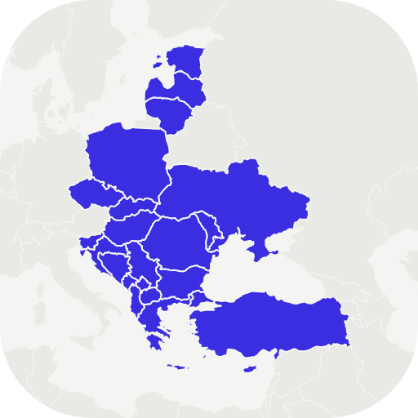
Twenty-two countries. One region.

From the Baltic coast to the Aegean and the Eastern Mediterranean: twenty-two countries, and close to €3 billion of disclosed venture funding in 2025. This study looks across the whole region.
Covered by the study
Rest of Europe, for context
Major venture hubs
The full region: Albania, Bosnia & Herzegovina, Bulgaria, Croatia, Cyprus, Czechia, Estonia, Greece, Hungary, Kosovo, Latvia, Lithuania, Moldova, Montenegro, North Macedonia, Poland, Romania, Serbia, Slovakia, Slovenia, Turkey and Ukraine.
4
What the original study found

A glimpse of what the U.S. study found. Uncovering CEE's own answers is the whole point of this survey.

101
opportunities weighed, on average, for every single deal a firm closes.
~½
of VCs name the founding team the single most important factor in a yes.
30%+
of deals arrive through the partners' own professional network.
83
days of due diligence, on average, between first serious look and a signed deal.
Source: Gompers, Gornall, Kaplan & Strebulaev (2020), Journal of Financial Economics. A survey of 885 U.S. venture capitalists. These four figures are a small selection of its many findings.
5
Who's asking
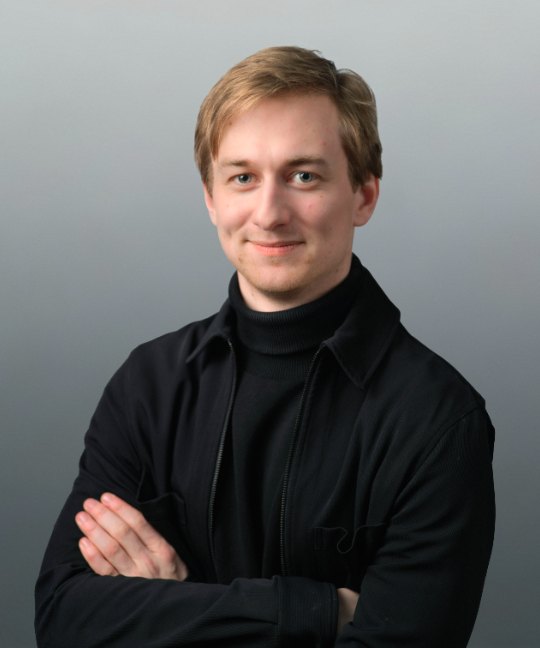
Tobias Kout

Tobias Kout

Master's candidate, Institute of Economic Studies, Charles University

I am writing my Master's thesis at the Institute of Economic Studies, Charles University in Prague. During my studies, I am also working as an investment analyst at BD Partners. Almost everything we know about how investors pick and back companies comes from the US and Western Europe. I want to find out how much of it holds in a younger market like ours.

This survey is the core of that research. It is independent and academic: your answers are used only for this research and reported strictly in aggregate, so no individual investor or fund is ever identifiable. The more investors take part, the more useful the results are for everyone in the ecosystem.

Institute of Economic Studies, Charles University (IES FSV UK), Prague, Czech Republic. Thesis supervised by prof. PhDr. Petr Teply, Ph.D.

6
Confidentiality

Individual answers stay strictly confidential.

The same standard as the original study: individual responses are kept strictly confidential and are reported only in aggregate statistics. No investor and no firm is ever identified, quoted or singled out, and nothing is shared with third parties. The data is used purely for academic research and handled in line with GDPR.

You can complete the whole survey without naming yourself or your firm, and you can skip any question you would rather not answer. Leaving an email at the end is optional, it is used only to send you the report and is stored with your answers so the report can reach you. If you would rather stay fully anonymous, simply leave it blank.

The full study

Ready when you are.

About 15-20 min / 10 short sections
The complete CEE venture study

Everything, in ten short sections: how you find, choose, structure, syndicate, support, and exit your deals, how your firm runs inside, and your read on where the region is heading.

The CEE Venture Capital Survey 2026
Tobias Kout / Master's thesis
Institute of Economic Studies, Charles University
Prague, Czech Republic
Privacy notice
Data controller: Tobiáš Kout, koutto@student.cuni.cz. Purpose: academic research (Master's thesis, IES, Charles University), results published only in aggregate. Legal basis: consent. Data: survey answers and, if you provide it, your email, stored together so the report can be sent to you. Retention: identifiers deleted within 3 months after the thesis defence, anonymised answers kept for research. You may request access, correction or deletion at any time at koutto@student.cuni.cz.
{{ stepLabel }}
Almost done

Where should we send the report?

Optional, and the only way to receive the report. Everyone who leaves an email gets the full report before the results are made public.

Your email is stored with your answers so the report can reach you, and is used for nothing else. Leave it blank to stay fully anonymous.
Please tick the box above to submit your responses.
We couldn’t reach the server. Your answers are safe on this device. Please try again.
{{ sectionNo }} / {{ sectionKicker }}

{{ sectionTitle }}

Your answers are saved on this device, so you can leave and return anytime. It’s completely fine not to know every answer, just skip any question you’re unsure about or would rather not answer.
{{ q.num }} {{ q.text }}
{{ q.help }}
{{ opt.hint }}
Selected: {{ q.selectedLabel }}
{{ q.sliderValueLabel }}
{{ q.minLabel }} {{ q.maxLabel }}
{{ q.maxNote }}
?
{{ row.label }}?
{{ row.hint }}
{{ q.allocTotal }}% OF 100
{{ row.label }}?
{{ row.hint }}
{{ q.allocTotalLabel }}
Please make the percentages add up to 100 before continuing.
{{ q.unit }}
! {{ navBlockMsg }}
Response recorded

Thank you for contributing to the CEE venture ecosystem.

If you know another investor in the region who should weigh in, forwarding this link genuinely strengthens the study.

Tobias Kout
Let's stay in touch
Tobias Kout
Institute of Economic Studies, Charles University

Whether it's about the study, the region, or anything venture, my inbox is open. Always glad to meet others working here 😊